Wallpapering Mastery: How to Execute Seamless Feature Walls and Intricate Patterns
Discover how Elite Decorators & Spraying Ltd achieve flawless feature walls using precision tools and expert techniques for large-scale murals and patterns.
What Makes a Feature Wall Work
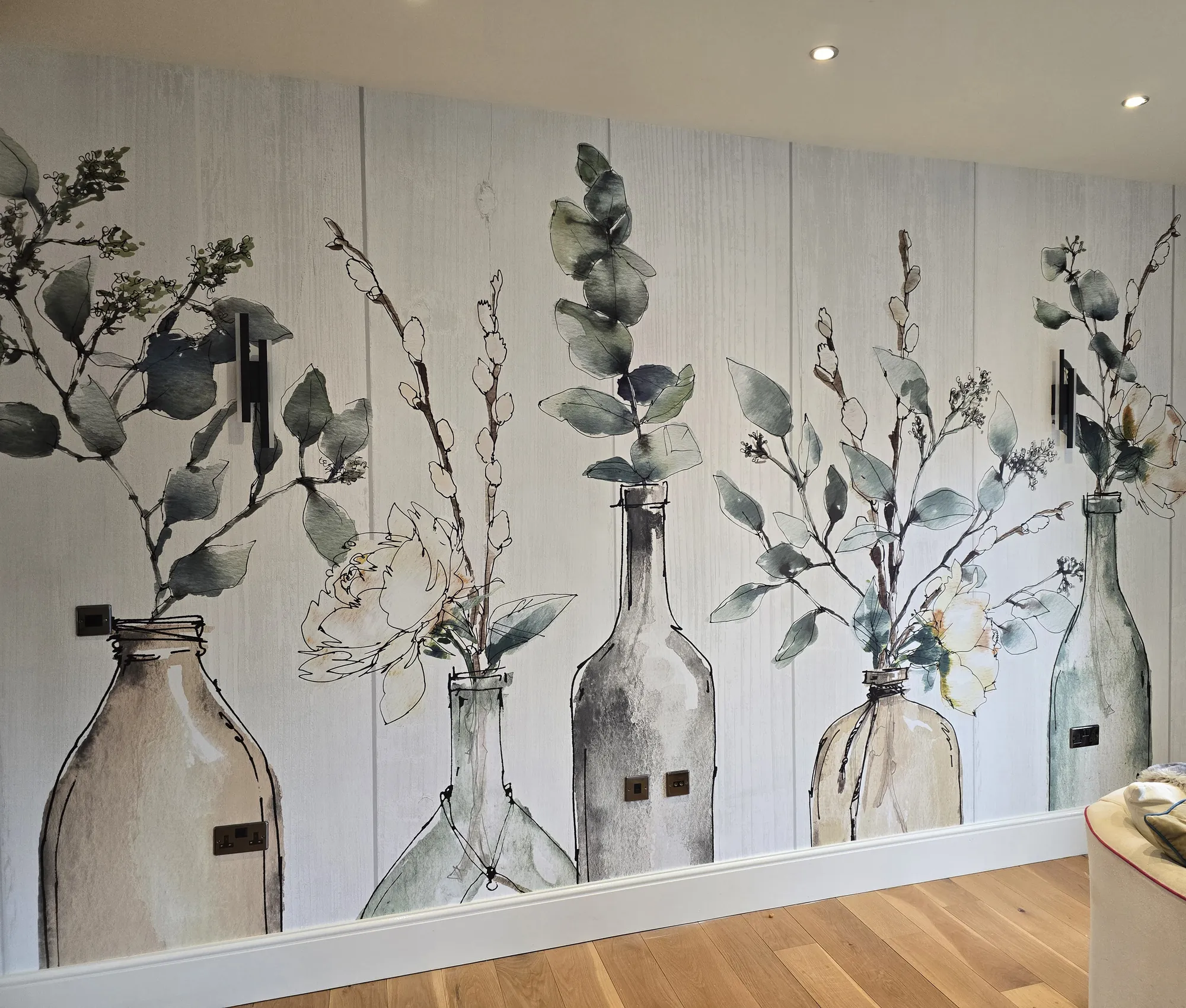
A feature wall is one of the few decorating jobs where every mistake is at eye level and impossible to ignore. There's nowhere to hide a pattern that drifts out of line or a seam that opens up a week later, which is why the hanging itself is only a small part of the work.
Measuring and Planning the Drops
Before anything is cut we work out where the seams will fall. Houses aren't square, and the corner you start in determines whether the pattern ends up split awkwardly across the focal point of the wall or lands cleanly. On patterned papers we plan the drops so the most visible area — usually behind a bed or above a fireplace — has a full, centred repeat rather than an offcut.
Pattern repeat also drives how much paper you need. A large repeat can add a surprising amount of waste, and ordering short means a second batch with a different shade number.
Preparing the Wall
Wallpaper doesn't hide a poor wall, it highlights it. Every nail hole, old adhesive residue and patch of uneven plaster will read through, particularly on a thin or light-coloured paper. Walls get filled, sanded flat and sized so the adhesive stays workable long enough to position and slide the drops rather than grabbing immediately.
New or freshly skimmed plaster needs to be genuinely dry and sealed first, otherwise the paper can lift as the wall continues to dry behind it.
Patterns and Custom Murals
Murals are numbered panels that only work if the first one is hung dead plumb — everything after it inherits that alignment. We hang to a plumb line rather than the corner of the room, because corners are rarely straight. With delicate or non-woven papers we paste the wall rather than the paper to avoid stretching and staining the face.
Tools That Earn Their Place
A laser level for plumb lines, a proper wallpaper table, sharp snap-off blades changed constantly so the cuts stay clean, a seam roller used sparingly, and a soft smoothing brush rather than a plastic scraper on textured or delicate papers. None of it is exotic; it's the discipline of using it consistently that shows in the result.
Looking After It
Most quality papers can be dusted with a soft brush and spot-cleaned gently with a barely damp cloth. Vinyl and paste-the-wall papers tolerate more. Save any offcuts — a spare drop is the only real fix if a section is ever damaged.
Thinking About a Feature Wall?
If you've got a paper in mind, or want advice on whether a particular wall suits one, request a free quote. We'll look at the wall, tell you what it needs beforehand, and give you a written price with no pressure.