uPVC Spraying vs. Replacement: Transforming Front Doors for a Fraction of the Cost
Discover how uPVC spraying can transform your home's kerb appeal. Learn why spraying is the cost-effective, durable alternative to replacing front doors and windows.
Spraying uPVC Instead of Replacing It
uPVC doors and windows rarely fail before they look tired. The frames are sound, the locks work and the units are still sealed, but the colour has faded and the once-white plastic has gone a chalky cream. Replacement solves a problem you don't really have, at a cost that reflects new units rather than a new colour.
Why Spraying Is Worth Considering
A sprayed front door or set of window frames typically costs a fraction of replacement and is usually done in a day or two rather than a week of fitters, mess and making good around the reveals. You also get colour choices the uPVC market doesn't offer as standard — anthracite grey, a specific heritage green, or a colour matched to the rest of your woodwork.
The honest limit: spraying fixes appearance, not function. If a door is dropping on its hinges, the seals have blown or the glazing is misted, replacement is the right call and we'll say so.
Why We Use HVLP
HVLP gives the control needed on frames surrounded by glass, brickwork and render. Lower overspray means less drift onto neighbouring surfaces and a cleaner edge along the glazing line, which is what makes the difference between a sprayed door that looks factory-finished and one that looks painted.
A Typical Front Door in Lutterworth
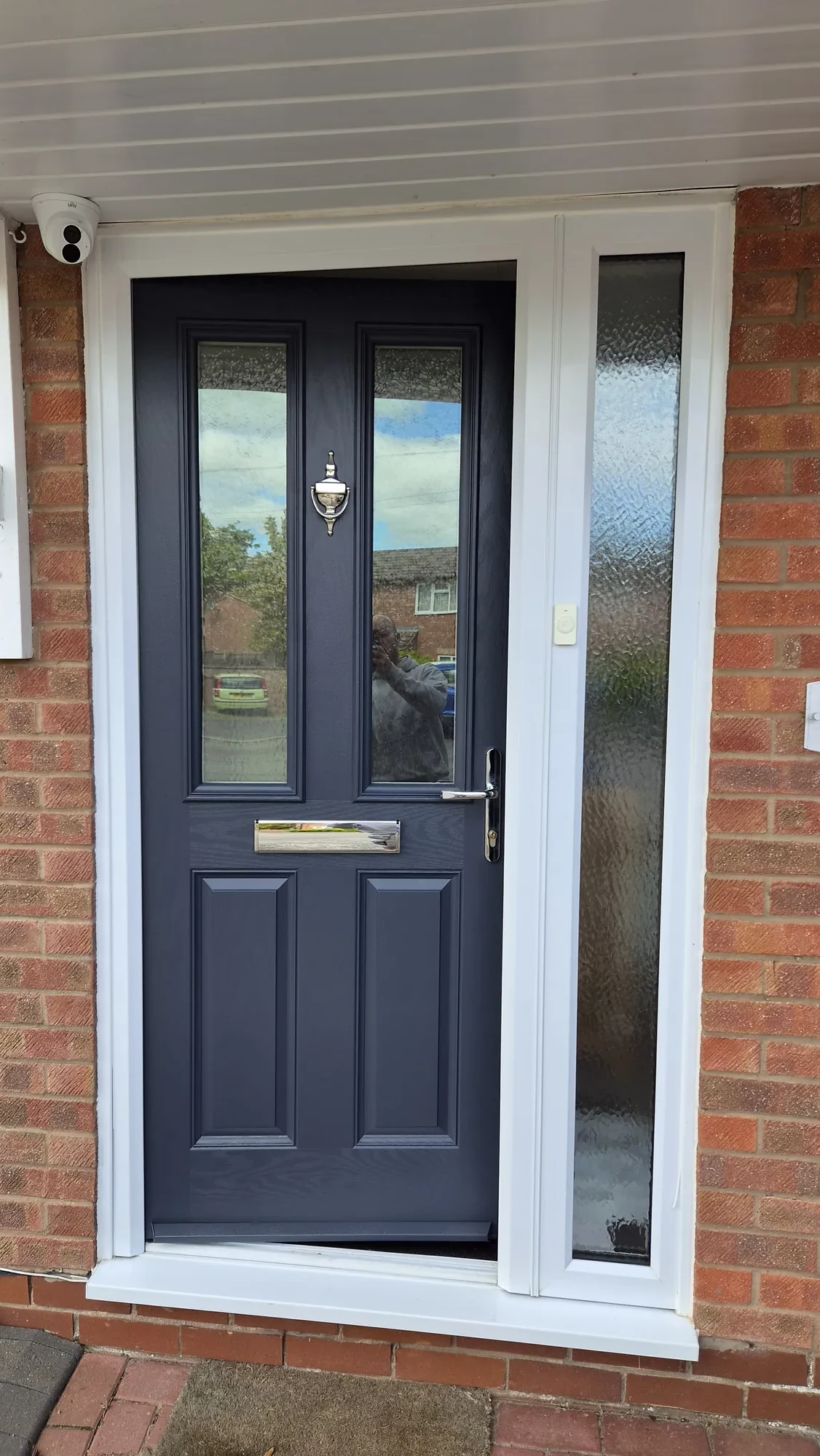
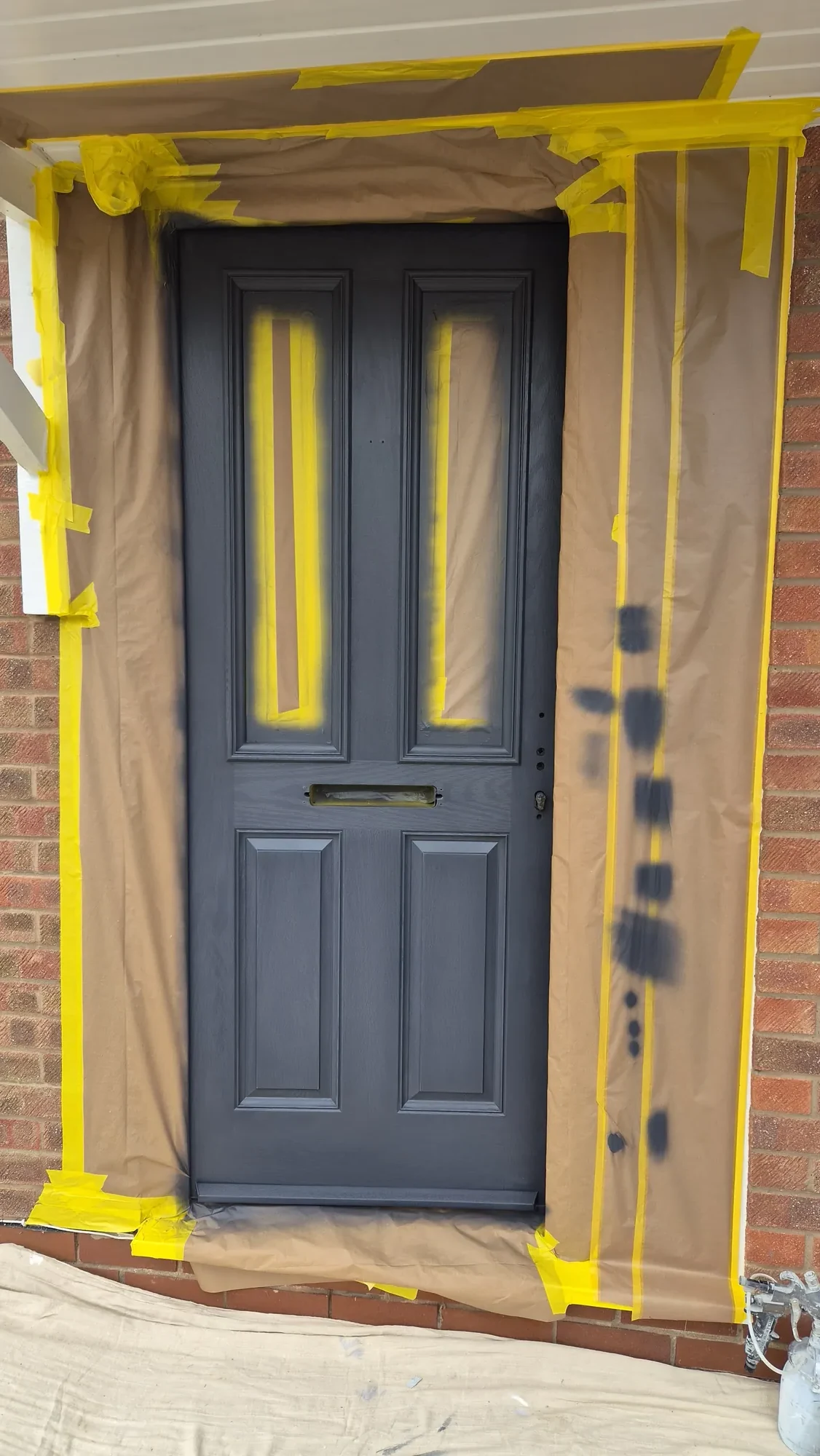
A faded white uPVC door and side panel taken to anthracite grey. Cleaning, degreasing and abrading the surface took the bulk of the morning; masking the glass, frame edge and surrounding brickwork took the rest. Spraying itself was under an hour, with the door back in normal use the same day.
Preparation Is What Makes It Stick
uPVC is smooth and non-porous, so adhesion is everything. The surface has to be thoroughly degreased — years of road film and cleaning product residue will otherwise sit between the plastic and the primer — then abraded and treated with an adhesion primer made for plastics. Done properly the coating bonds to the substrate rather than sitting on it.
Colour and Sheen
Satin is the usual choice on uPVC. It looks closest to a factory-finished frame and doesn't spotlight the slight texture moulded into older plastic the way gloss does. Darker colours absorb more heat, so on a south-facing door we'll talk through the shade rather than just matching a picture.
How It Holds Up
A properly prepared and sprayed uPVC door should hold its colour for many years with nothing more than occasional washing with mild soapy water. Avoid abrasive creams and solvent cleaners, which will dull any coating over time.
Getting a Price
We spray uPVC doors, windows, garage doors and conservatory frames around Lutterworth and the surrounding area. If you'd like yours assessed, book a free survey — we'll check the condition, be straight about whether spraying is the right answer, and provide a written price with no pressure.