The Ultimate Guide to Kitchen Paint Durability: Trade Coatings vs. Retail Paints
Discover why trade-grade coatings outperform retail paints for kitchen spraying. Learn about adhesion, durability, and our recent oak kitchen project in Market Harborough.
Why the Coating Decides How Long a Kitchen Lasts
A kitchen respray lives or dies on the coating. Cabinet doors get handled with wet hands, wiped with cleaning products, splashed with cooking oil and knocked by cupboard contents several times a day. Very few paints sold for general decorating are built for that.
The Limitation of Retail Paints
Retail eggshell and satinwood are formulated for skirting boards, doors and window frames — surfaces that get touched occasionally, not constantly. They're also formulated to be forgiving with a brush, which means they stay softer for longer while they cure.
The practical result on a kitchen is marking around handles within weeks, and coatings that never fully harden in the drawer fronts where air circulation is poor. It's not that retail paint is bad paint; it's being used somewhere it wasn't designed for.
What Trade-Grade Coatings Do Differently
The coatings we spray — typically Renner systems on kitchens and joinery — are made for factory application to furniture. They cure to a genuinely hard film, resist cleaning products and cooking grease, and hold their colour rather than yellowing on whites and pale greys.
They also need spray application and correct thinning to work properly, which is the honest catch: you can't buy the same result in a tin and brush it on.
A Recent Oak Kitchen in Market Harborough
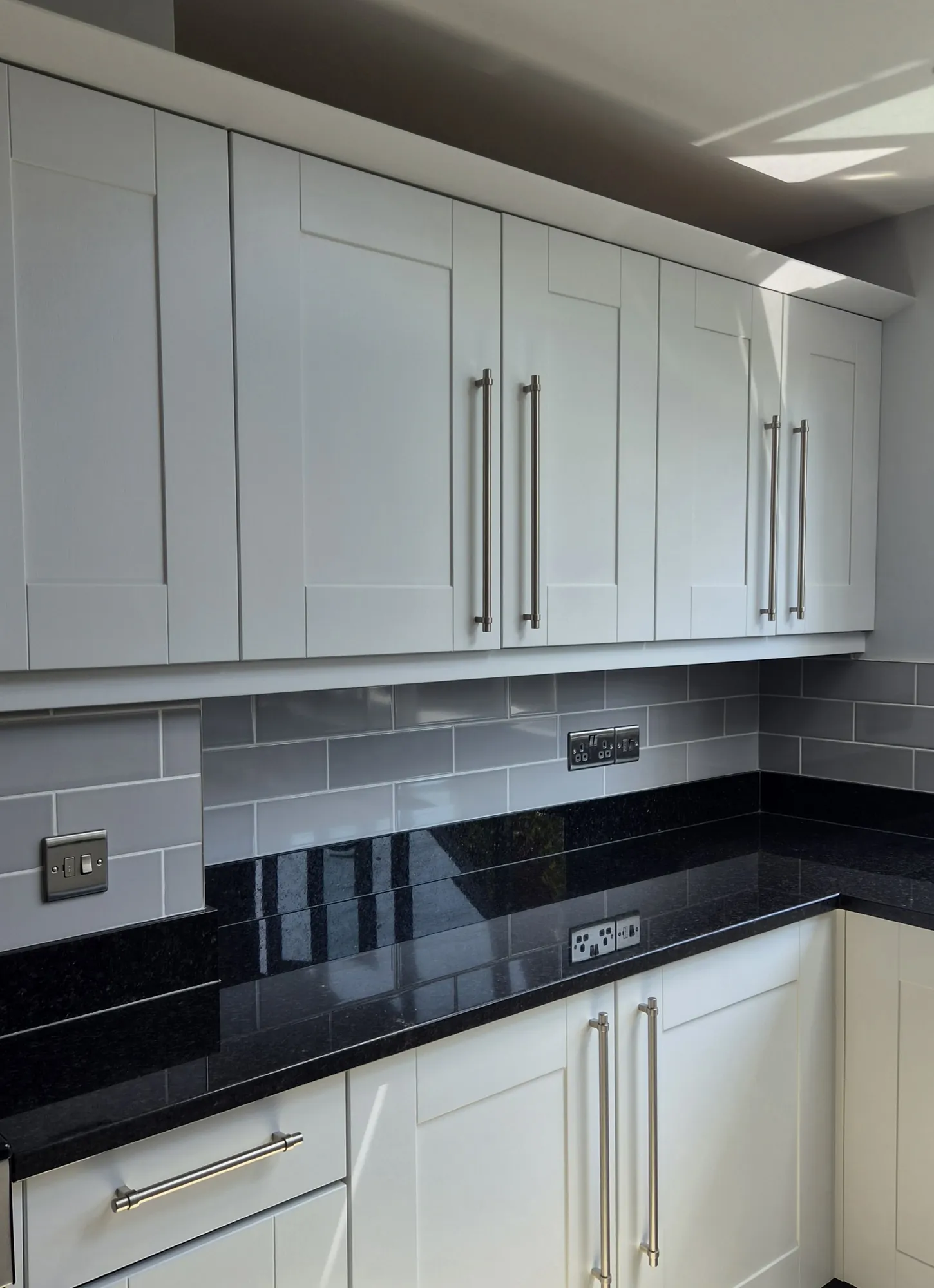
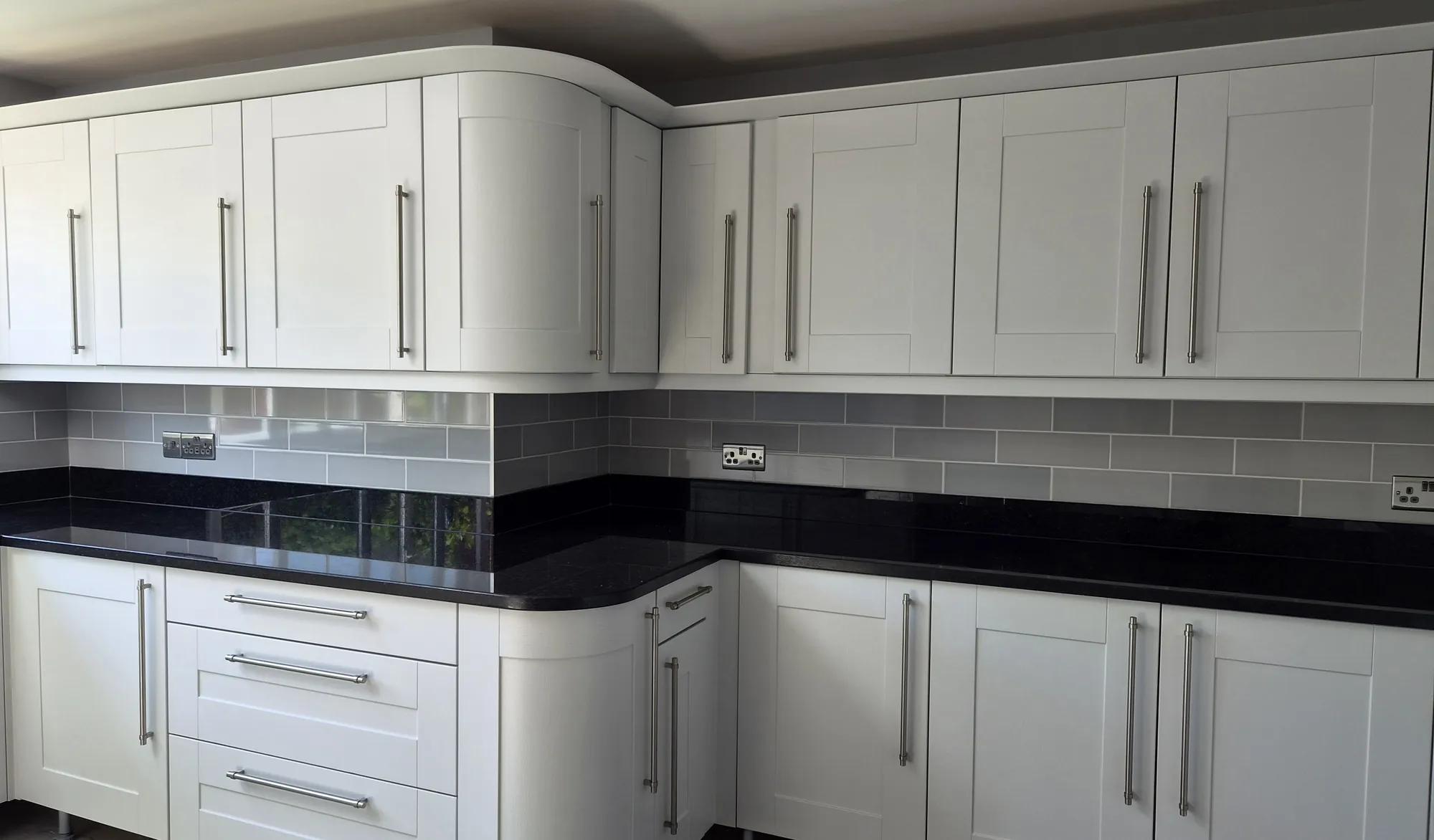
A solid oak kitchen with an open grain and years of cooking residue. Preparation took the majority of the time — degreasing, sanding, and a grain-filling stage so the finished doors read as smooth rather than showing every pore. With a two-pack primer and sprayed topcoats, the finished doors have taken daily family use since without marking around the handles.
Why the Primer Stage Matters
The primer does the adhesion work and blocks anything in the substrate that might bleed through — tannins in oak being the obvious one. Skip the right primer on an oak kitchen and brown staining can come through a white topcoat weeks later, by which point the only fix is to start again.
Sheen Levels in a Working Kitchen
Satin and eggshell are the sensible default for most kitchens: enough sheen to wipe down easily, not so much that every slight imperfection in an older door is spotlit. Matte looks superb in photographs and is harder work to keep clean around a hob. Gloss looks sharp but needs significantly more preparation to justify itself.
Why Application Matters as Much as the Product
A good coating applied badly performs like a bad one. Film thickness, temperature, drying time between coats and dust control all affect how hard the finish ends up. That's the real difference between a sprayed kitchen that still looks right in five years and one that's marking by the following spring.
Getting a Price for Your Kitchen
If you're weighing up a respray and want to know what coating would suit your kitchen and how it'll hold up, request a free quote. We'll look at what you've got, explain what we'd specify and why, and give you a written price with no pressure.