The Hidden Labour of Bare MDF: Sealing and Priming for a Furniture-Grade Finish
Discover why bare MDF requires specialist preparation and how HVLP spraying with Little Greene paint creates a flawless, durable finish for bespoke joinery.
The Challenge of Working with Bare MDF
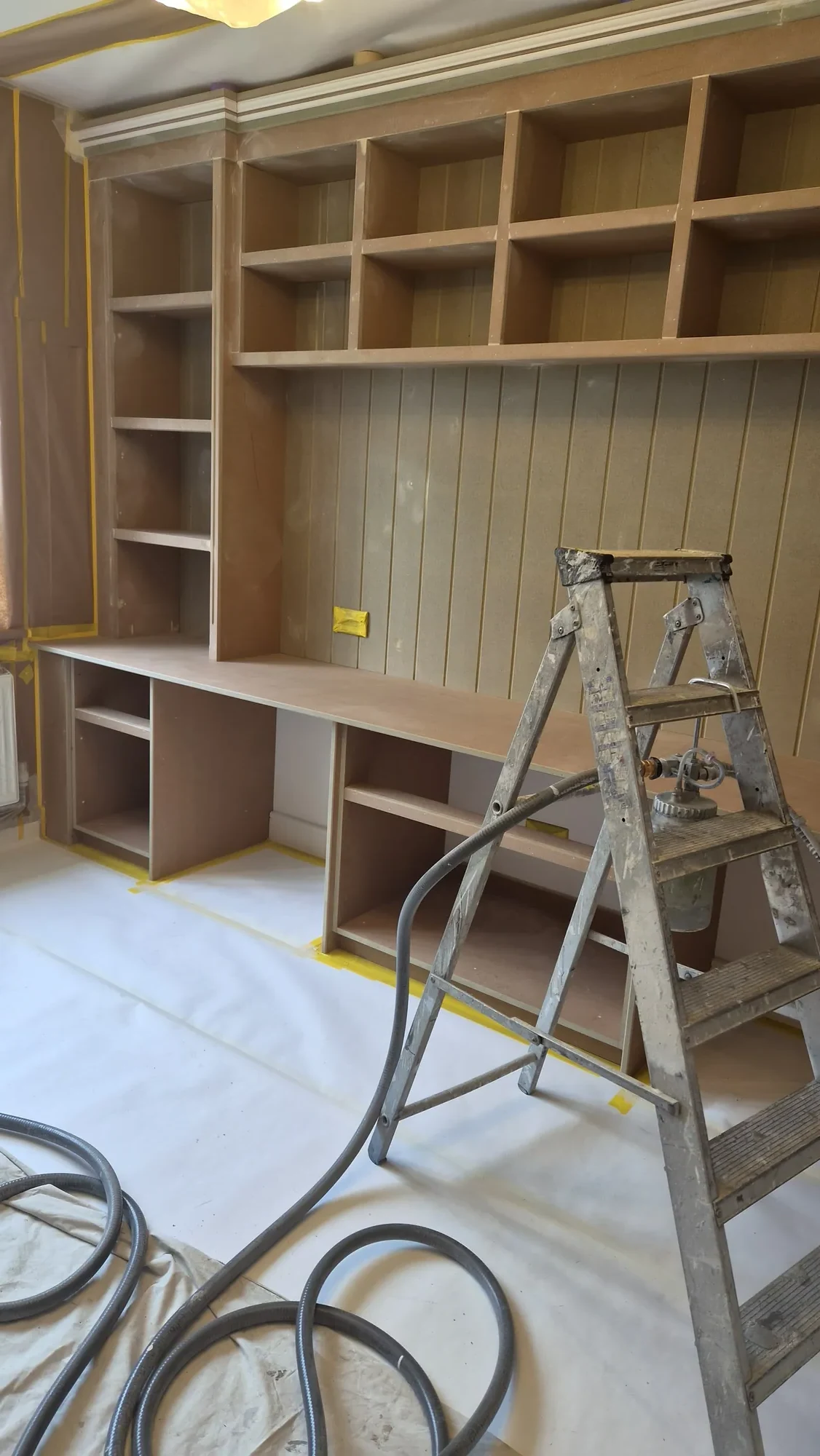
Bare MDF looks like the easiest surface in the world to paint. It's flat, it's smooth, and there's no grain to fight. In reality it's one of the most labour-intensive materials we handle, and the reason is the edges.
MDF is compressed wood fibre and glue. The faces are dense and sealed by the manufacturing process, but every cut edge is effectively exposed fibre that drinks up whatever you put on it. Paint straight onto a raw edge and it soaks in, swells the fibres and leaves a rough, furry line no amount of topcoat will hide.
Why Preparation Isn't Optional
Getting MDF right means sealing those edges first, usually with a dedicated MDF primer or sealer, then sanding back once the raised fibres have dried hard. Often that has to happen twice before the edge is as smooth as the face. Screw holes and joins get filled and sanded flat at the same stage.
This is the part of the job nobody sees and it's where most of the hours go. On a run of built-in wardrobes, sealing and priming can take longer than applying the colour. If a quote for bespoke joinery looks unusually cheap, this is normally the stage that's been skipped.
The Advantage of HVLP Spraying
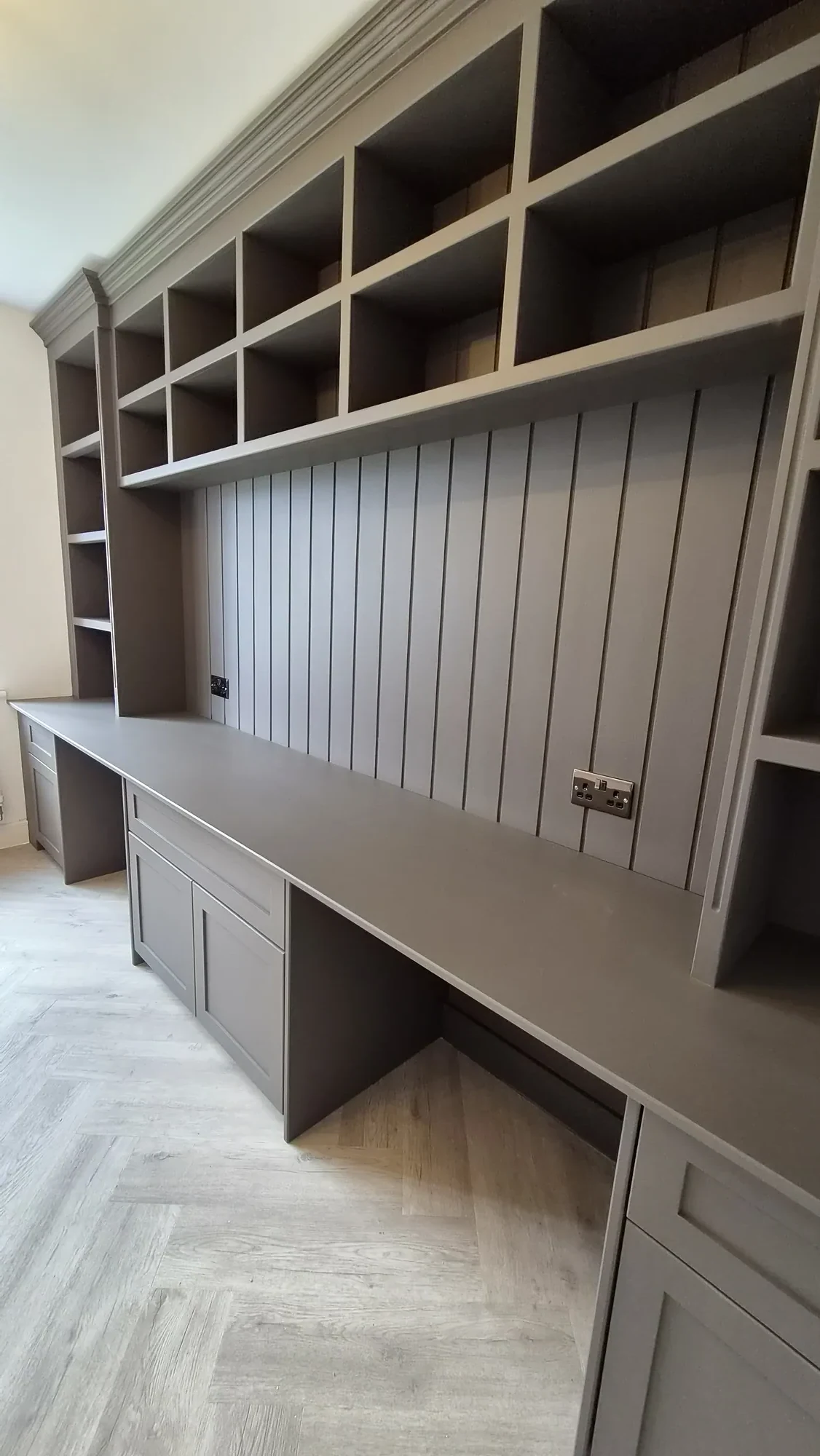
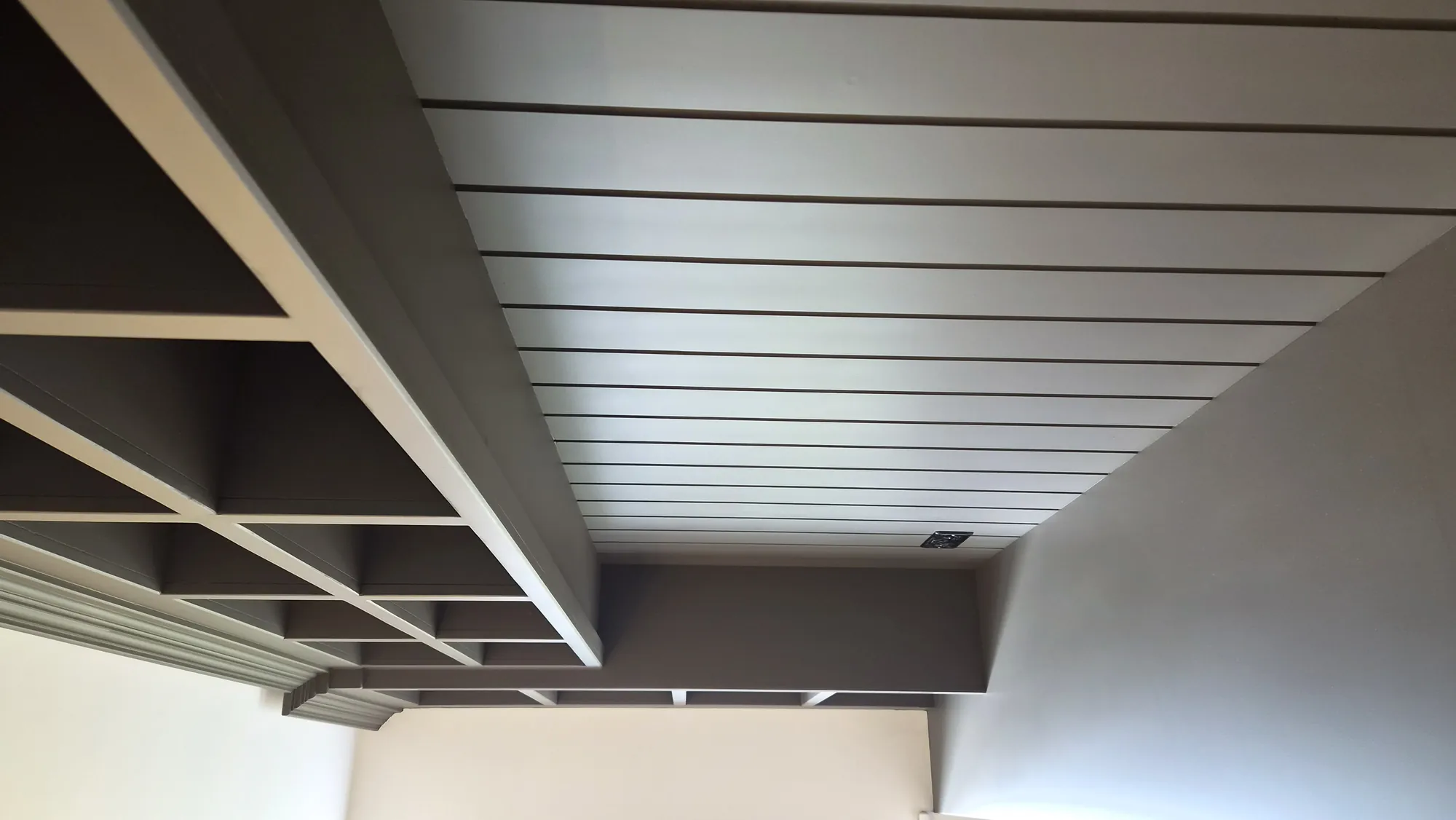
Once the substrate is properly sealed, spraying gives a finish a brush can't match on flat panels. HVLP lays down a thin, even film with no brush marks and no roller stipple, and it gets into the recesses of shaker detailing evenly rather than pooling in the corners.
Why Little Greene Paint?
We use Little Greene on a lot of interior joinery because the pigment load is high, so colours hold their depth rather than looking washed out after a couple of coats, and the intelligent eggshell cures hard enough for furniture that gets touched daily. It's not the cheapest option, but on a bespoke piece the coating is a small part of the total cost and a large part of how it looks.
Layering for Longevity
A typical build on bare MDF is: sealer, sand, primer, sand, then two topcoats with a light denib between. Each layer does a different job — the sealer stops absorption, the primer gives a uniform base for colour, and the topcoats provide the durable surface. Dropping one of them to save a day costs you years at the other end.
Bespoke Joinery Across Leicestershire
We finish bare MDF joinery regularly around Market Harborough, Lutterworth and the surrounding villages — wardrobes, alcove units, media walls and panelling. If you've got a piece being built or one that's been sitting primed for a while, book a free survey. We'll tell you what it actually needs and give you a written price, with no pressure to go ahead.