Choosing the Right Sheen for Built-In Furniture: From Dead-Matte to High-Gloss
Discover how to choose the perfect finish for bespoke furniture. From dead-matte anti-glare coatings to high-gloss luxury, learn how sheen levels impact your interior.
Why Sheen Matters More Than People Expect
Most of the conversations we have about colour are settled quickly. Sheen is the decision people give least thought to and regret most often, because it changes how a colour reads in the room, how visible every imperfection is, and how easy the furniture is to keep clean.
Understanding Sheen Levels: From 3% to 90%
Sheen is measured as the percentage of light a surface reflects. Roughly speaking: 3-10% is dead matte to matte, 20-30% is eggshell, around 40% is satin, and 70-90% is gloss. Those numbers matter because the higher you go, the more light bounces off the surface — and reflected light picks out every ripple, filler mark and joint underneath.
Dead Matte (3-10%)
Absorbs light and hides small surface imperfections well. Looks deep and soft, particularly in dark colours. The trade-off is cleanability — lower-sheen films are more porous, so marks can be harder to wipe off.
Eggshell and Satin (20-40%)
The most practical range for furniture that gets handled. Enough sheen to wipe clean, not so much that it highlights every flaw. This is what we specify for the majority of wardrobes and kitchen units.
Gloss (70-90%)
Striking on the right piece, unforgiving on the wrong one. Gloss magnifies the substrate beneath it, so it only works where the preparation has been taken several steps further than usual.
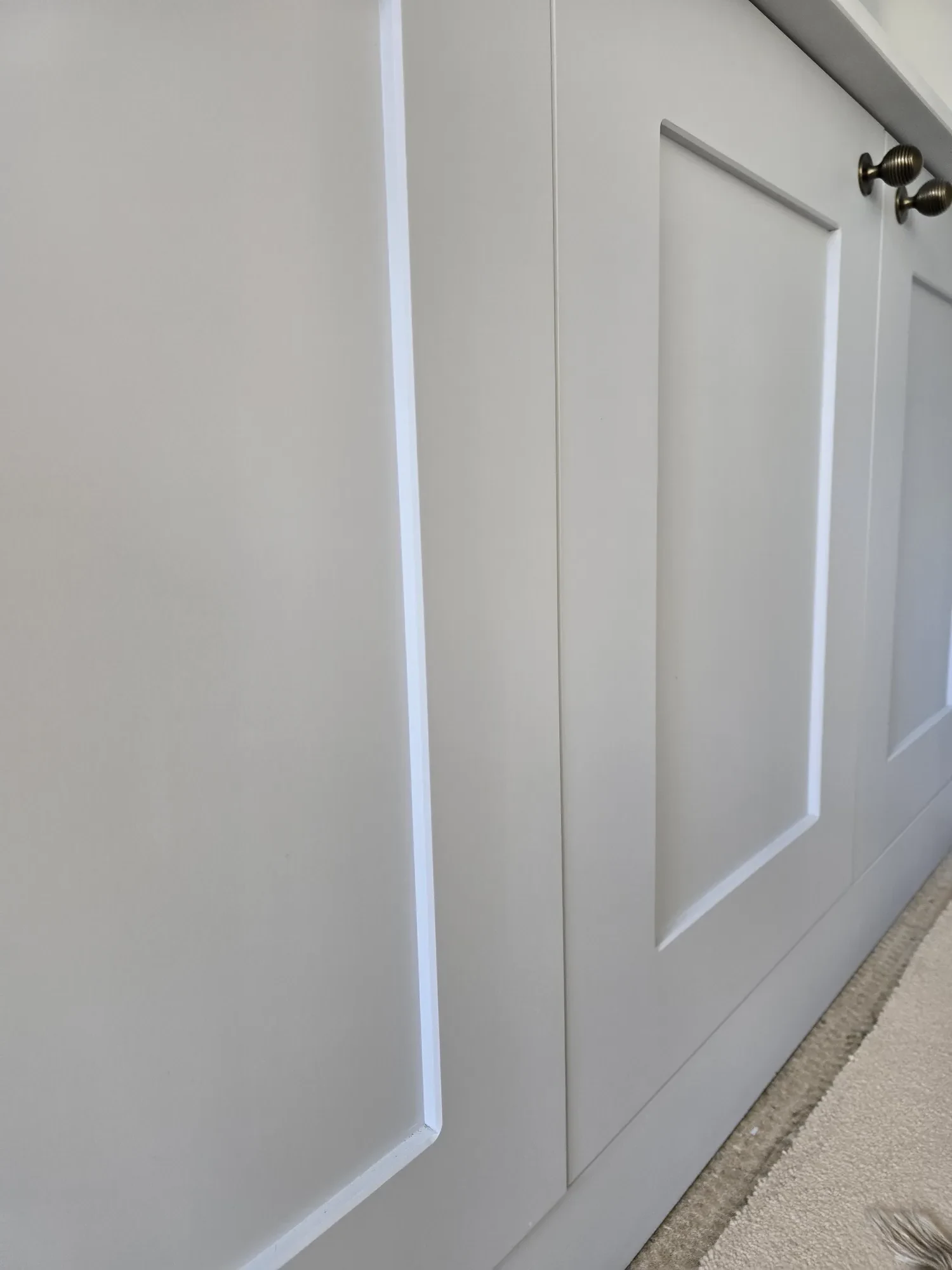
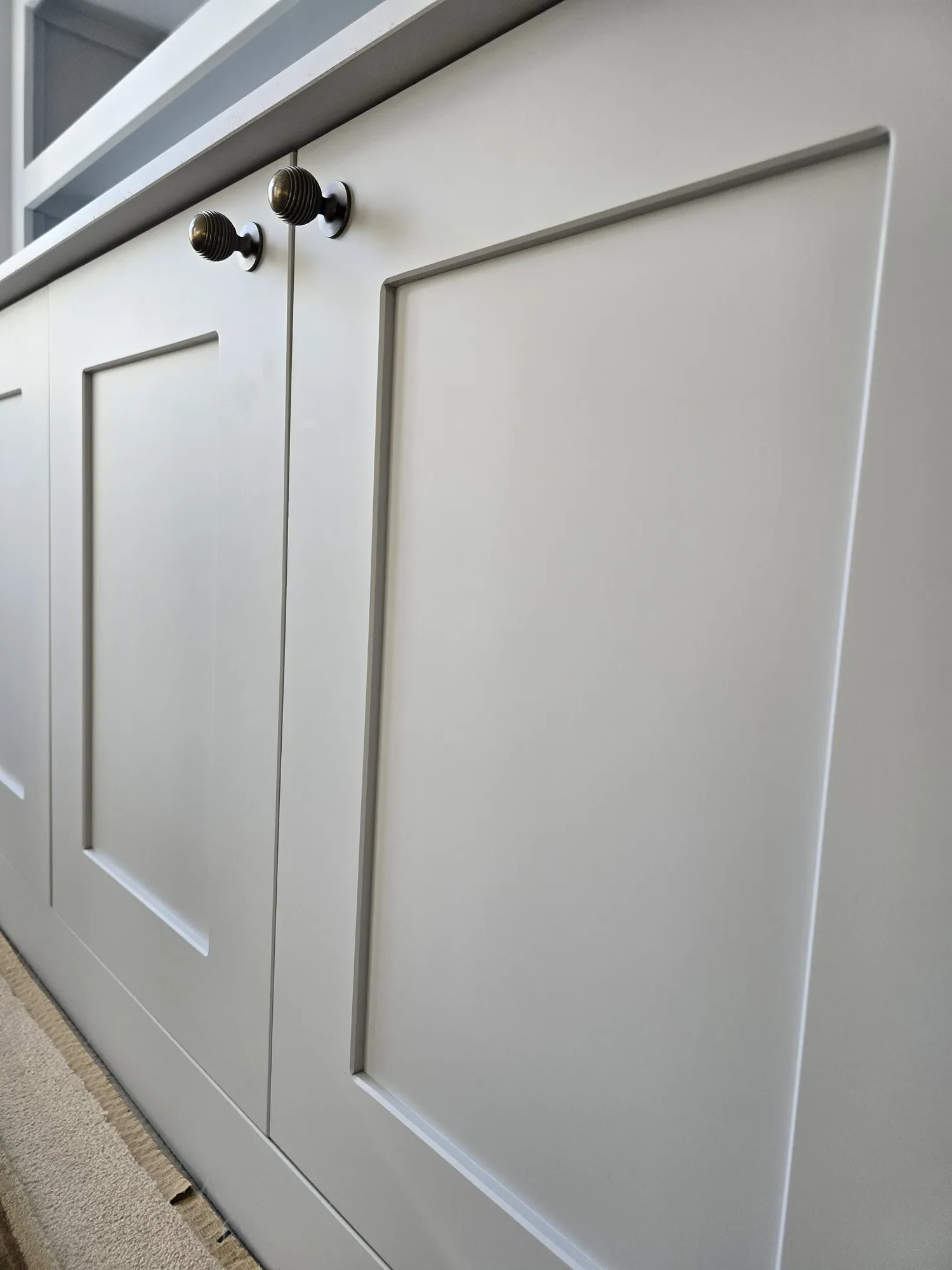
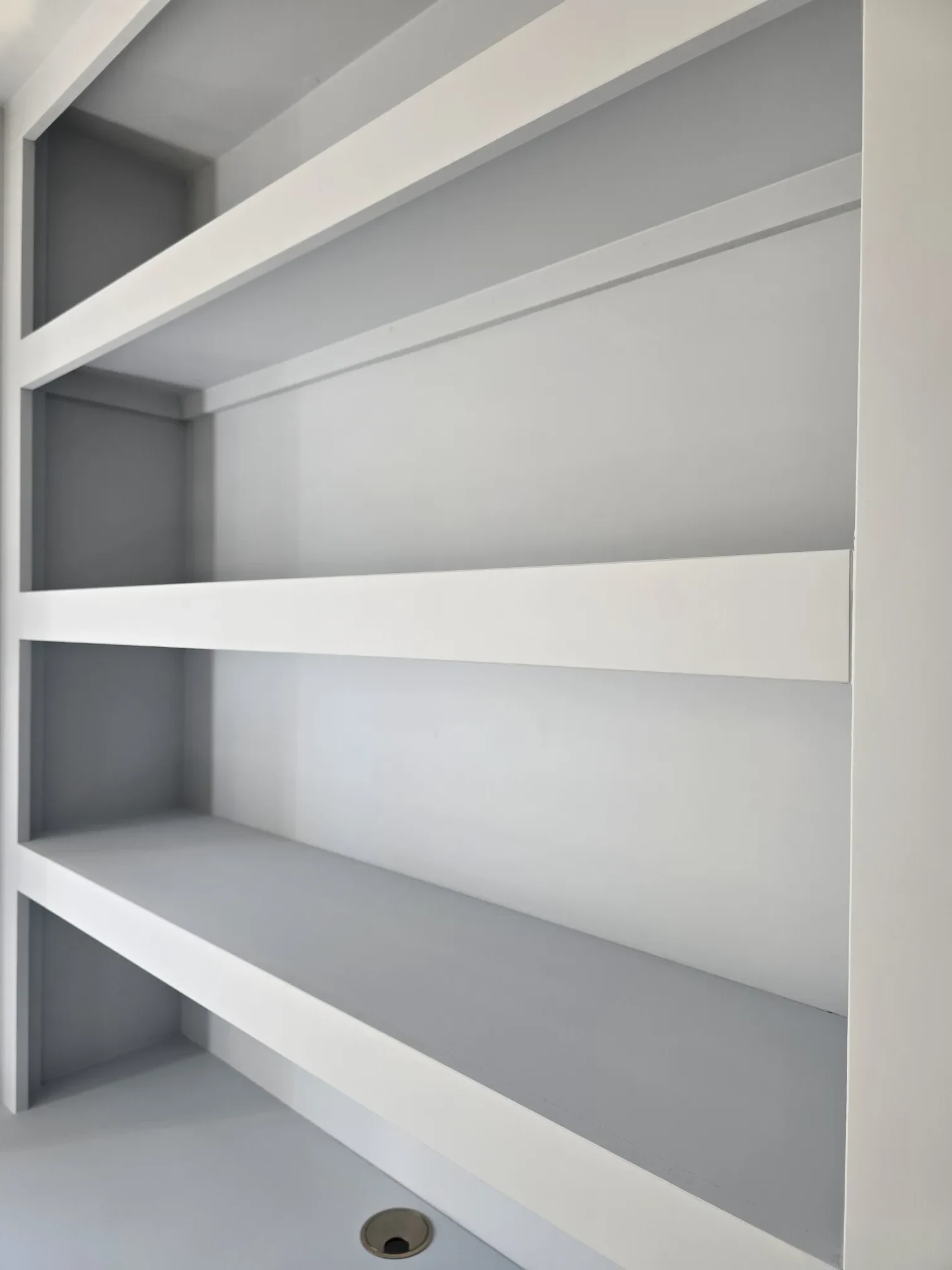
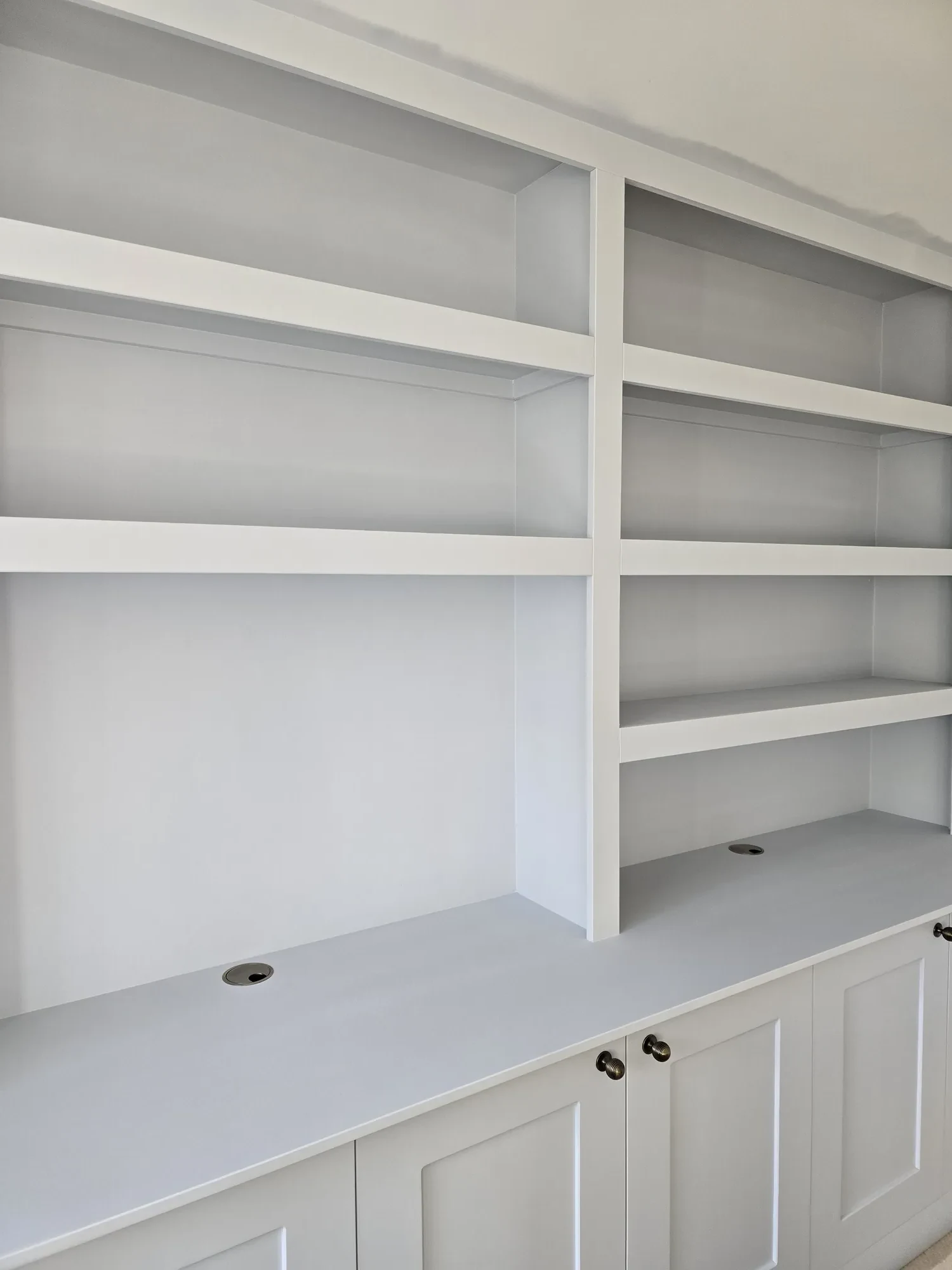
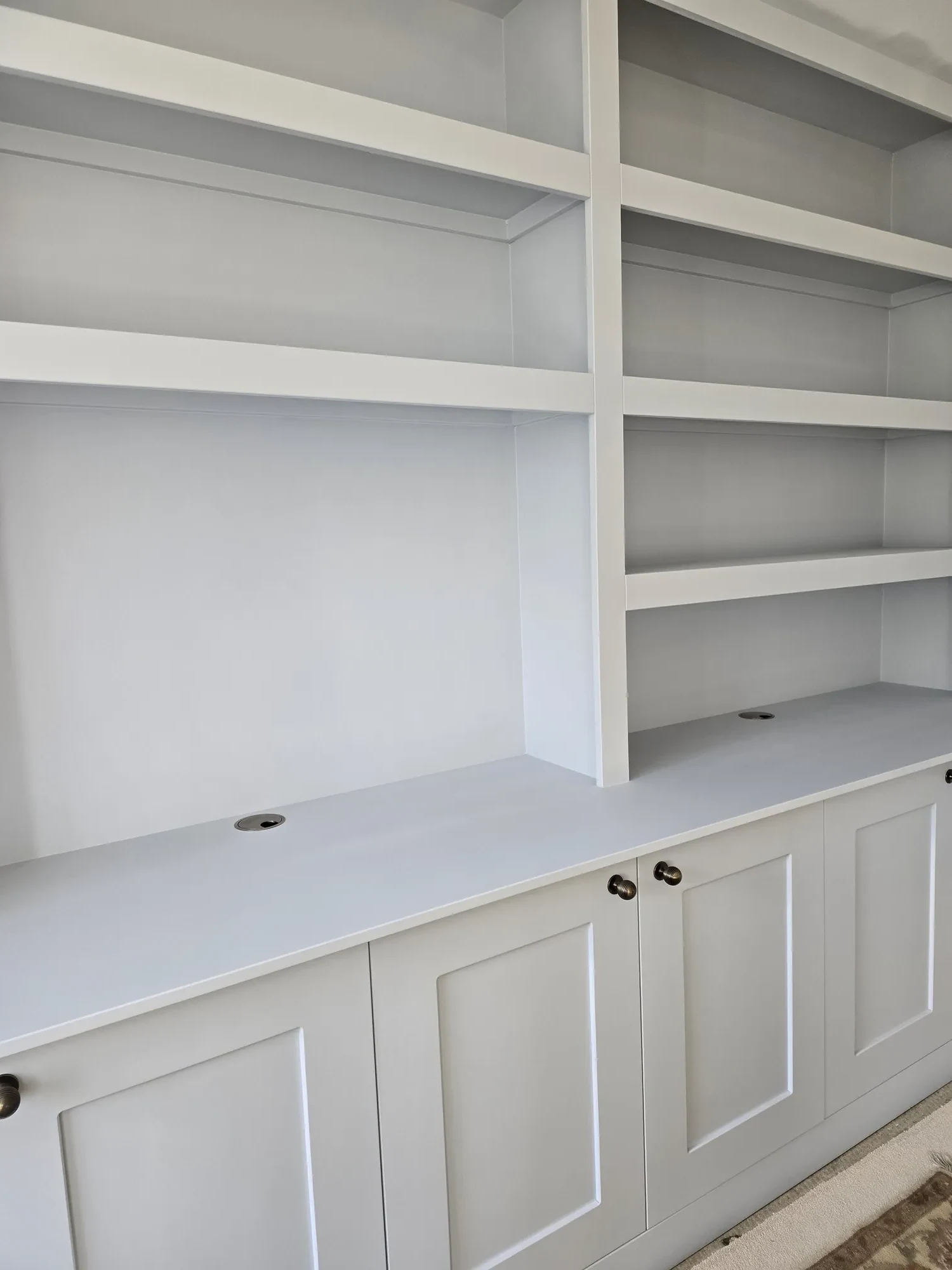
Project Example: Anti-Glare Media Units in Market Harborough
On a recent media wall the units sat directly opposite a large window and under a row of downlights. A satin finish would have thrown glare straight back at the sofa and washed out the colour. We specified a low-sheen finish instead, which held the depth of the colour through the day and kept the television screen readable rather than competing with reflections.
The Practical Benefits of Low-Sheen Finishes
Beyond glare, low sheen is forgiving on older joinery. Built-in furniture that's been moved, adjusted or repaired over the years rarely has perfectly flat panels, and a matte film lets those small variations disappear rather than announcing them every time the sun comes round.
Preparation Scales With Sheen
The higher the sheen, the more preparation the job needs. A matte finish might need one filling and sanding stage; a gloss finish on the same doors could need two or three, plus a primer sanded far finer. When a gloss quote comes back noticeably higher than a satin one, that extra preparation is what you're paying for.
When to Choose a Higher Sheen
Higher sheen suits new, flat, factory-made panels, smaller pieces where the reflection becomes a feature, and rooms with limited natural light where the bounce is welcome. It also wipes clean more easily, which is worth considering on a child's bedroom furniture.
Choosing for Your Room
The right sheen depends on the light in the room, the condition of the joinery and how the piece gets used — which is hard to judge from a chart. We bring sample boards out so you can see the options in your own light before committing. If that would help, request a free quote and we'll bring samples along, with no pressure to book anything.