How We Achieve a 'Glass Finish' on Living Room Media Units: Process Breakdown
Discover how Elite Decorators & Spraying Ltd uses HVLP technology and Mirka dustless sanding to create a factory-grade finish on bespoke living room media units.
The Anatomy of a Premium Furniture Finish
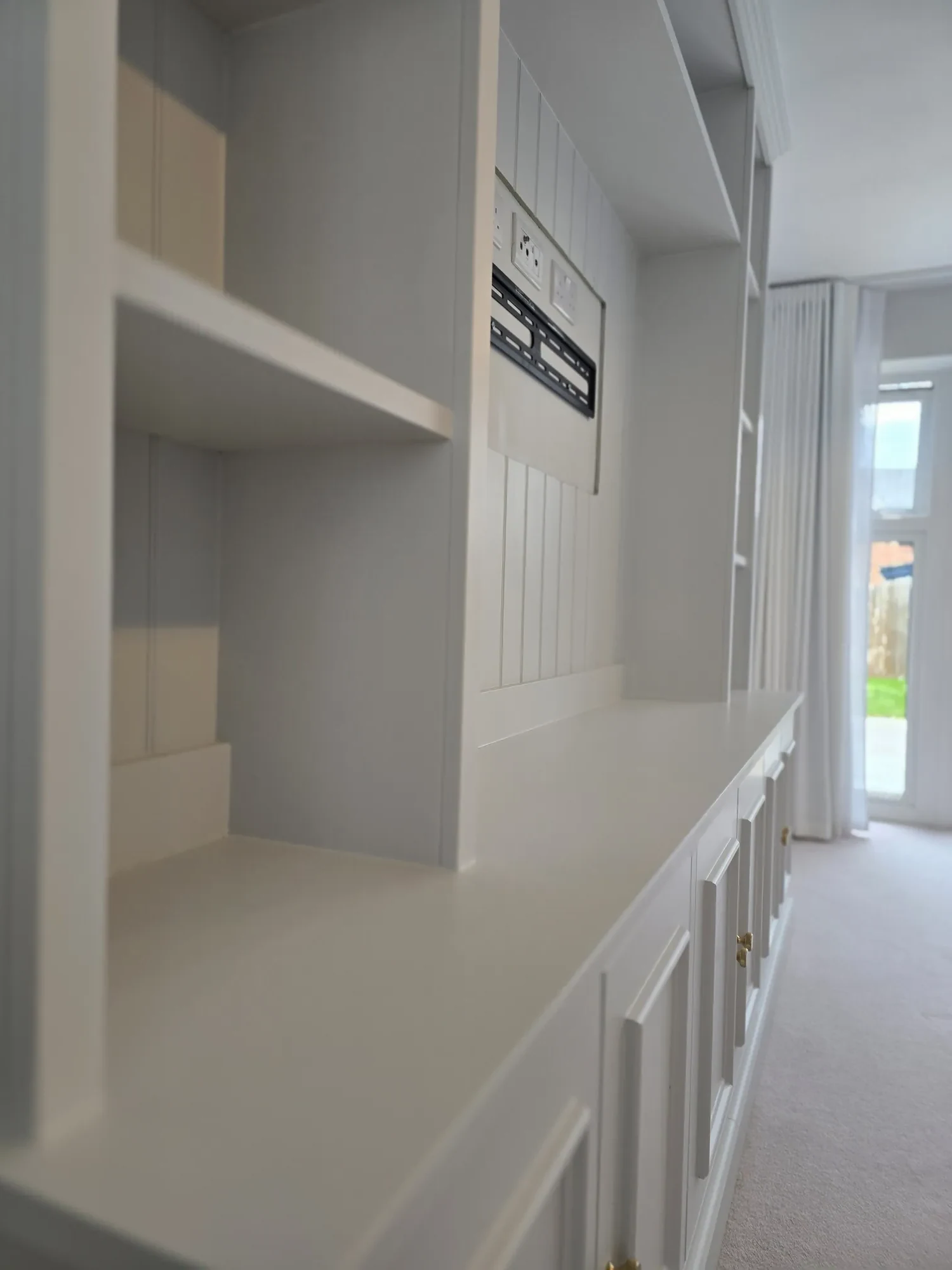
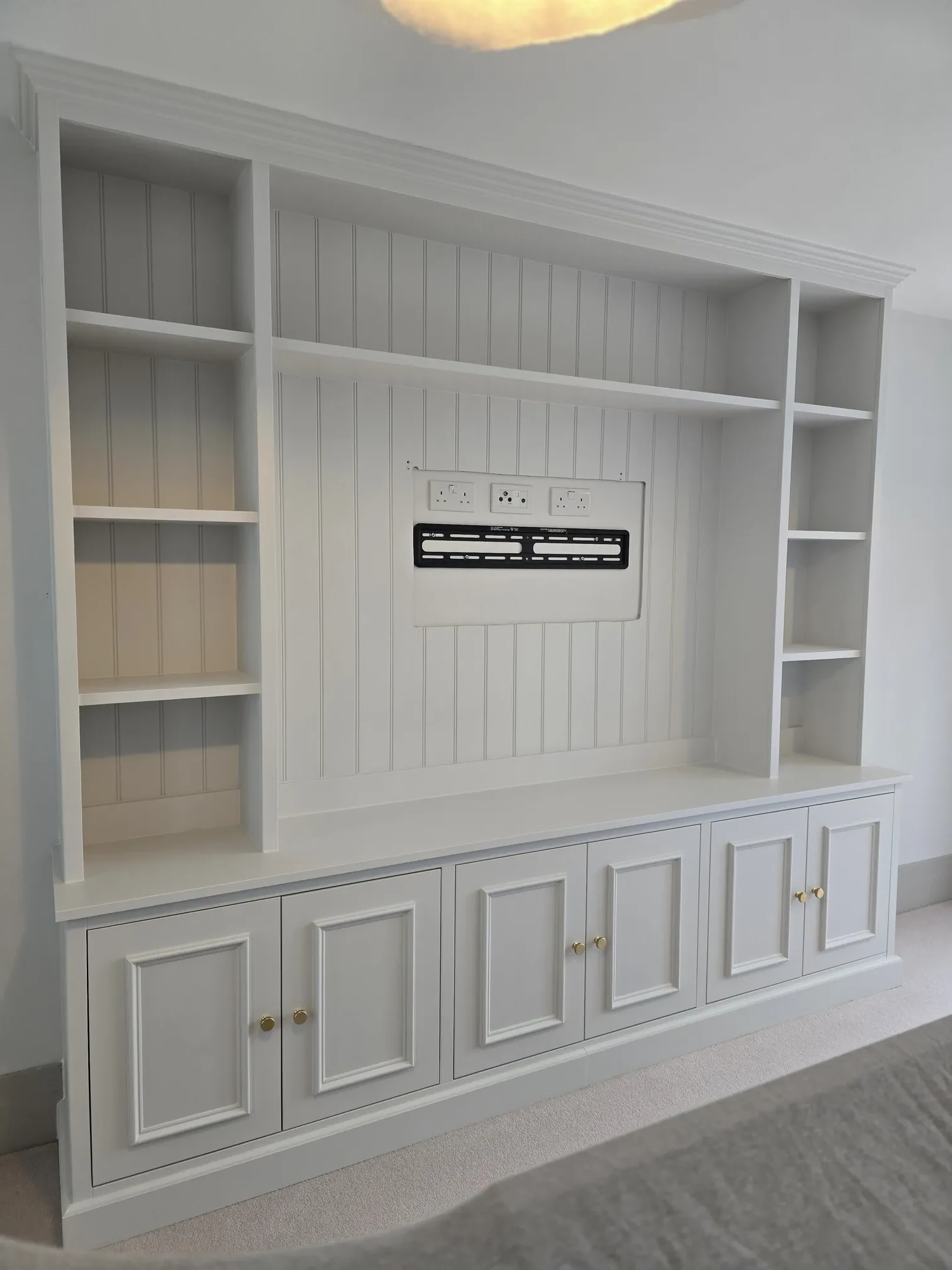
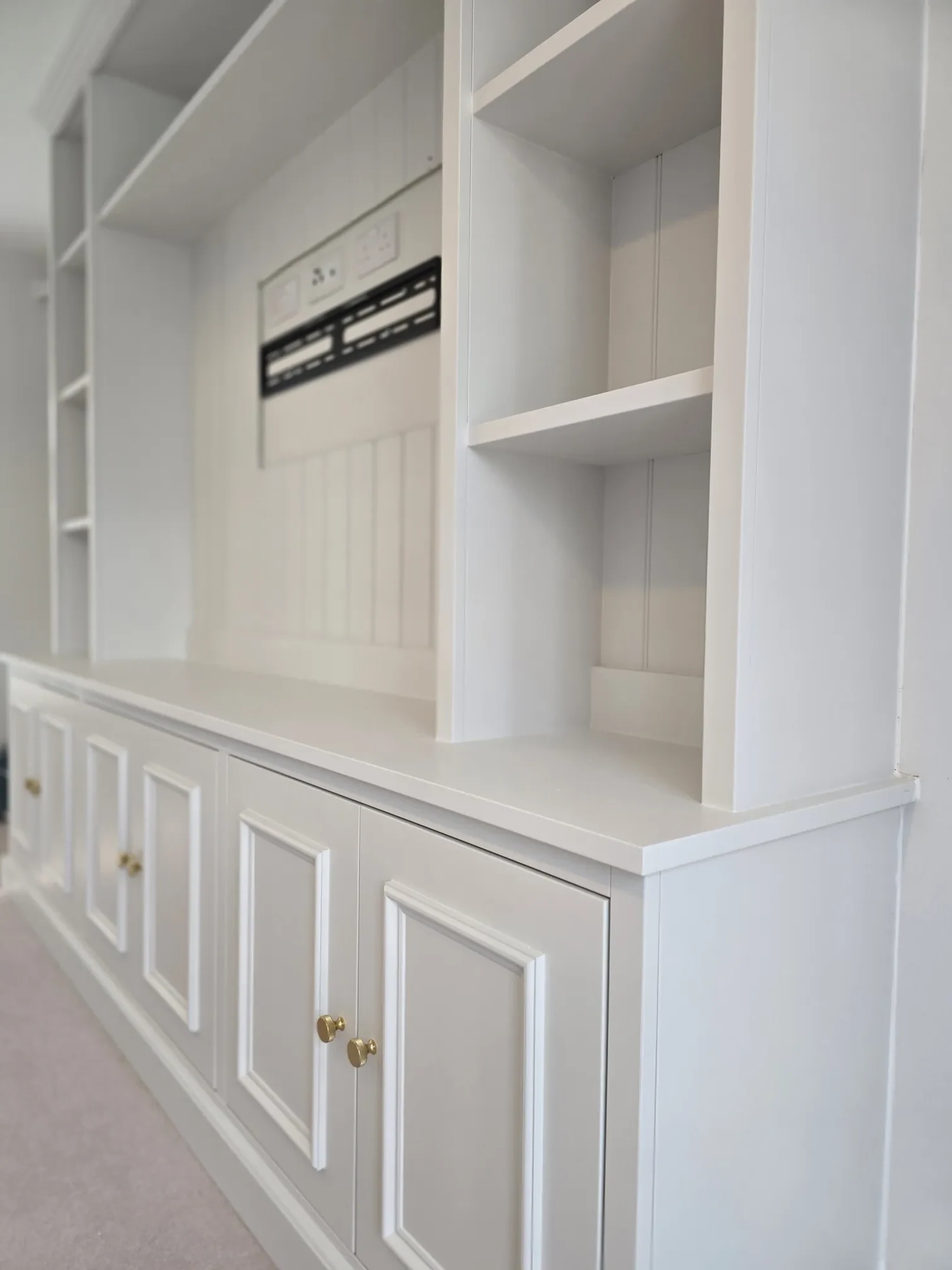
When people ask us for a "glass finish" on a media unit, what they usually mean is a surface with no brush marks, no roller texture and no visible joins — something that looks like it was made in a factory rather than painted in a living room. That look is achievable on site, but it comes from preparation and control of the environment far more than from any one product.
The Role of HVLP Spraying vs Traditional Methods
A brush or roller always leaves some texture behind. On a wall that texture is invisible; on a large flat media unit panel at eye level, catching the light from a window, it shows clearly. HVLP spraying atomises the coating into fine droplets that flow together as they land, so the film levels out into one continuous surface.
The trade-off is that spraying demands much more setup. Everything not being sprayed has to be sealed off, and the coating has to be thinned and the gun set correctly for the material. That setup time is why sprayed joinery costs more than hand painting — the painting itself is the quick part.
Preparation and the Importance of Dustless Sanding
A sprayed finish shows every speck of dust that lands in the wet paint. We sand between every coat using Mirka abrasives connected to vacuum extraction, which pulls the dust away at the disc rather than letting it settle around the room and drop back into the next coat.
It also makes the job liveable. Sanding joinery by hand in an occupied house puts fine dust through the whole ground floor. Extraction keeps the majority of it out of the air, which matters when we're working in a family home rather than a workshop.
Selecting the Right Coating: Why Tikkurila Helmi 10?
Helmi 10 is a water-based furniture lacquer with a low sheen, designed for interior joinery rather than walls. It cures hard enough to handle the knocks a media unit takes — remote controls, cables, the occasional foot — without the yellowing you get from older oil-based lacquers on light colours.
The low sheen is a practical choice too. A media unit usually sits opposite a window or under downlights, and a higher gloss level would throw reflections across the panels and highlight any slight movement in the MDF underneath.
The Step-by-Step Spraying Process
In practice a media unit runs like this: mask and seal the area, fill and sand any joins or fixings, apply an appropriate primer, denib and sand, then two coats of topcoat with a light sand in between. Each stage has to be fully dry before the next, which is why even a modest unit is usually a two to three day job.
Why Choose Professional Spraying?
Spraying built-in furniture isn't the right answer for every job. If a unit is in a spare room and simply needs freshening, hand painting is perfectly sensible and cheaper. Spraying earns its cost when the piece is a focal point, the colour is going to be scrutinised in daylight, and you want it to still look right in five years.
If you've got a media unit or run of built-in joinery you're thinking about, request a free quote. We'll look at the piece, tell you honestly whether spraying is worth it for your situation, and give you a written price with no pressure either way.